How to Protect Car from Hail When Parked Outside
A hail-resistant cover or a shaded, sheltered spot reduces damage, but the only way to recover the cost of what gets through is comprehensive coverage on your policy.
Cover it, move it, or accept the risk
If a car has to sit outside, the choices are limited. A heavy quilted hail cover made for that purpose stops dents on the hood, roof, and trunk. Parking under a carport, an overpass, or even next to a tall building that blocks the sky helps too, since hail falls mostly straight down. Beyond that, there isn't much a parked car can do for itself.
None of this prevents damage with certainty. A bad enough storm will dent a car under a cover and crack a windshield under a tree. What these steps do is lower the odds and the severity. The part you control completely is whether comprehensive coverage is on your policy before the storm, because that's what pays for the dents a cover couldn't stop.
Whether you have comprehensive coverage
Hail damage is covered under comprehensive coverage, not collision. If your policy only carries liability, a hailstorm that dents the hood and cracks the windshield comes out of your own pocket entirely. This matters most for an older car that's been paid off for years, where some owners drop comprehensive to save money.
If the car is worth enough to repair rather than write off, comprehensive is worth checking before storm season, not after a forecast already shows hail coming. Insurers can decline to add coverage once a storm is imminent in your area, so this is a question to settle in a calm week, not the night before a warning.
Check your declarations page for a line that says comprehensive, and look at the deductible next to it. A high deductible on an older car can mean the payout barely covers the repair once the deductible is subtracted.
Where and how the car is parked
A cover helps most on the horizontal surfaces, the hood, roof, and trunk, where hail falls directly. It does less for the sides of the car, which stay exposed in a cover designed mainly for impact from above. A garage protects everything, but when that's not available, any overhead cover changes the outcome, even a gas station awning or a drive-through roof during a sudden storm.
Moving the car once a hail warning is issued is worth doing if there's anywhere to go. Parking garages, covered mall lots, and even a highway underpass during a storm are common choices. The risk is being caught on the road once hail actually starts, so this only works if there's enough warning.
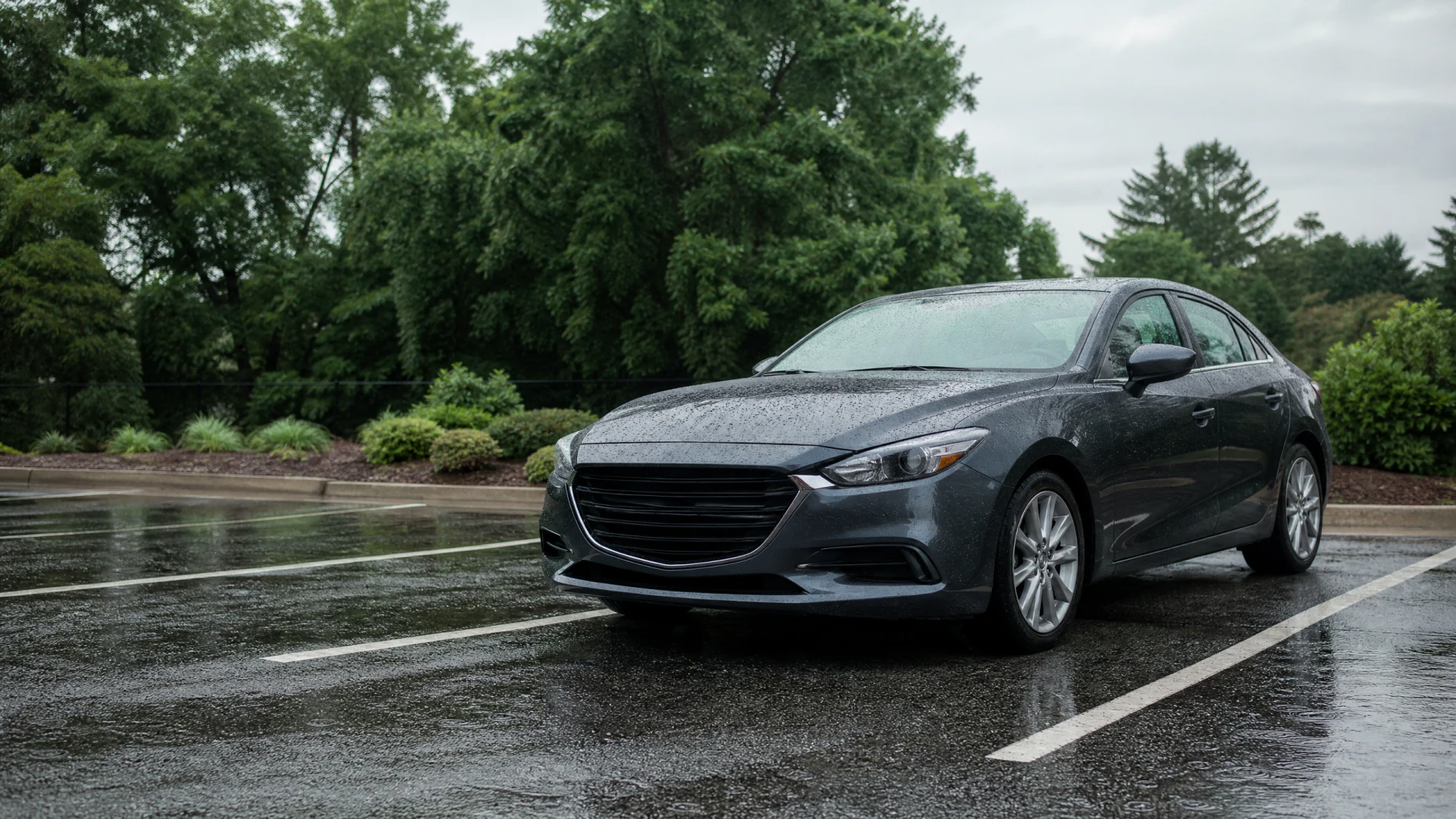
If the car has to stay in an open driveway or street spot, a padded hail cover is the single most effective thing to buy, more effective than blankets or moving pads, which shift and don't absorb impact the way a purpose-made cover does.
Questions people ask about this
Does a regular car cover protect against hail?
A regular car cover, the kind meant for dust and sun, does little against hail because it has no padding to absorb impact. A hail-specific cover is thicker, often with foam or quilted padding, and is made to cushion the blow rather than just shield the paint. If the only cover on hand is a standard one, it's better than nothing but won't stop dents from anything but small hail.
Will my insurance rate go up after a hail damage claim?
This depends on your insurer and your state, since hail is usually treated as a weather event rather than an at-fault claim. Many insurers don't raise rates for comprehensive claims tied to weather, but policies and state rules vary. Ask your insurer directly how a hail claim is rated before you file, so there are no surprises.
How do I know if hail damage is worth filing a claim for?
Compare the cost of repair to your deductible, since a claim only makes financial sense if the damage exceeds what you'd pay out of pocket anyway. Get an estimate from a body shop or a mobile hail repair service first. If the dents are cosmetic and minor, it may cost less to simply leave them or pay for touch-up work yourself.
Can I use blankets or moving pads instead of a hail cover?
Blankets and moving pads can take the edge off small hail but they shift in wind and don't stay anchored, which limits how well they protect the car. A hail cover is designed with straps or elastic edges to stay in place during a storm. If blankets are the only option, securing them tightly with cords or bungees across the car helps, but they're a backup, not a real substitute.
Does parking under a tree protect a car from hail?
A tree can block some hail, but it isn't a reliable shield and can create new risks, like falling branches in high wind. Dense leaf cover reduces small hail impact somewhat, but larger hailstones still get through, and a storm strong enough for hail often brings wind that endangers a car parked under a tree in other ways.
If you're not sure your policy would actually pay out after a storm like this, it's worth comparing what other insurers offer before the next one hits.
Pull out your policy's declarations page this week and check whether comprehensive coverage is listed, along with the deductible next to it. Call your insurer or agent if anything is unclear, since this is the coverage that pays for hail damage, not collision or liability. If you don't already have a hail cover and the car typically sits outside, buy one made for that purpose rather than relying on a sun shade or blankets. Keep an eye on weather alerts in hail season so you have time to move the car under a carport, garage, or covered lot if a warning comes through. If a storm has already passed and you see dents, get an estimate before deciding whether a claim is worth filing against your deductible.