Deer Collision Coverage for Seniors in West Virginia
Deer collision coverage pays to repair or replace your car after you hit a deer or other animal, and in West Virginia it falls under your comprehensive coverage rather than being its own separate policy.
What this coverage pays for
Covers
- Collision with a deer If you strike a deer on the road, the damage to your car is covered under comprehensive, not collision, even though it feels like a collision.
- Swerving damage, sometimes If you swerve to avoid a deer and hit a tree or guardrail instead, that's usually collision coverage, not comprehensive, so check which one you carry.
- Other animals too Elk, livestock, groundhogs and the occasional bear all fall under the same animal-strike coverage, not just deer.
- Glass and lights A cracked headlight or windshield from an animal strike is repaired under the same claim as the rest of the body damage.
- A rental car while yours is fixed Many policies include a daily allowance for a replacement car if the repair takes more than a day or two, but this depends on what you added to your policy.
- Total loss payout If the car is damaged beyond what it's worth to repair, you're paid the car's value instead of getting it fixed.
Doesn't cover
- Your own injuries Medical costs from the crash come from your health insurance or medical payments coverage, not from this part of the policy.
- A deer that runs off unhurt If there's no damage to your car, there's nothing to claim, even if the near-miss shook you up.
- Mechanical problems afterward If something unrelated breaks down later, like a belt or hose, that's a maintenance issue and not tied to the animal strike.
- Damage from swerving into another car If you hit another vehicle while avoiding a deer, that's handled by liability coverage, since another driver's car is involved.
- A deer that was already dead If you hit something already in the road rather than a live animal, some policies still treat it as comprehensive, but it depends on how the claim is written up, so ask your agent if you're unsure.
For most older drivers in West Virginia, this coverage is worth keeping
West Virginia has more deer on its roads than most states, especially on rural and wooded routes, so the odds of a strike are real rather than theoretical. If you drive through hills, farmland or anywhere near woods at dawn or dusk, this isn't a rare scenario, it's a routine one for a lot of drivers here.
What matters most is what your car is worth and whether you could cover a repair bill yourself. If you're driving a car that's older and already paid off, and it wouldn't be a hardship to pay for a fender repair out of savings, you could reasonably drop this and self-insure that risk. If replacing the car would strain your finances, keeping the coverage makes sense regardless of age.
How much you drive and where the car sits overnight also matter. A driver who mostly stays in town and keeps the car in a garage faces less risk than one who drives rural roads daily or parks on the street near a tree line. Mileage and location shift the odds more than age does.
Some drivers in their eighties start to drive less and wonder if that changes things. It does lower the odds, but it doesn't eliminate them, since even a short trip on a country road at the wrong hour is enough. The decision comes down to the math on your own car and your own comfort with risk, not a rule about age.
What happens when you file a claim
After an animal strike, you pay your deductible and the coverage pays the rest, up to what your car is worth. If the repair costs less than your deductible, there's no point filing a claim at all, since you'd just be paying the whole thing yourself anyway.
Most claims start with a call or online report, photos of the damage, and an inspection either at a shop or by an adjuster who comes to you. If the car is drivable, you can usually keep driving it until the repair is scheduled, unless the damage affects safety like broken lights or a damaged wheel.
If the car is declared a total loss, you're paid the car's value rather than the cost to fix it, and you keep the salvage title or hand the car over depending on how you want to settle it. Have your registration, a description of what happened, and the name of your preferred repair shop ready when you call, since that speeds things along.
If a deer carcass is left in the road, it's worth reporting that separately to the state or local authorities, since that's a public safety matter apart from your insurance claim.
Comprehensive versus collision coverage
Comprehensive coverage
This is the coverage that actually includes animal strikes, along with weather damage, theft, vandalism and falling objects. It covers things that happen to your car when you're not the one driving into something.
Collision coverage
This covers damage from hitting another car, a tree, a guardrail or anything else you crash into while driving, including swerving to avoid an animal. It's priced and chosen separately from comprehensive.
If you want protection from a deer strike itself, comprehensive is the one that matters, and most drivers who carry one carry both since they're usually sold as a pair.
Real situations
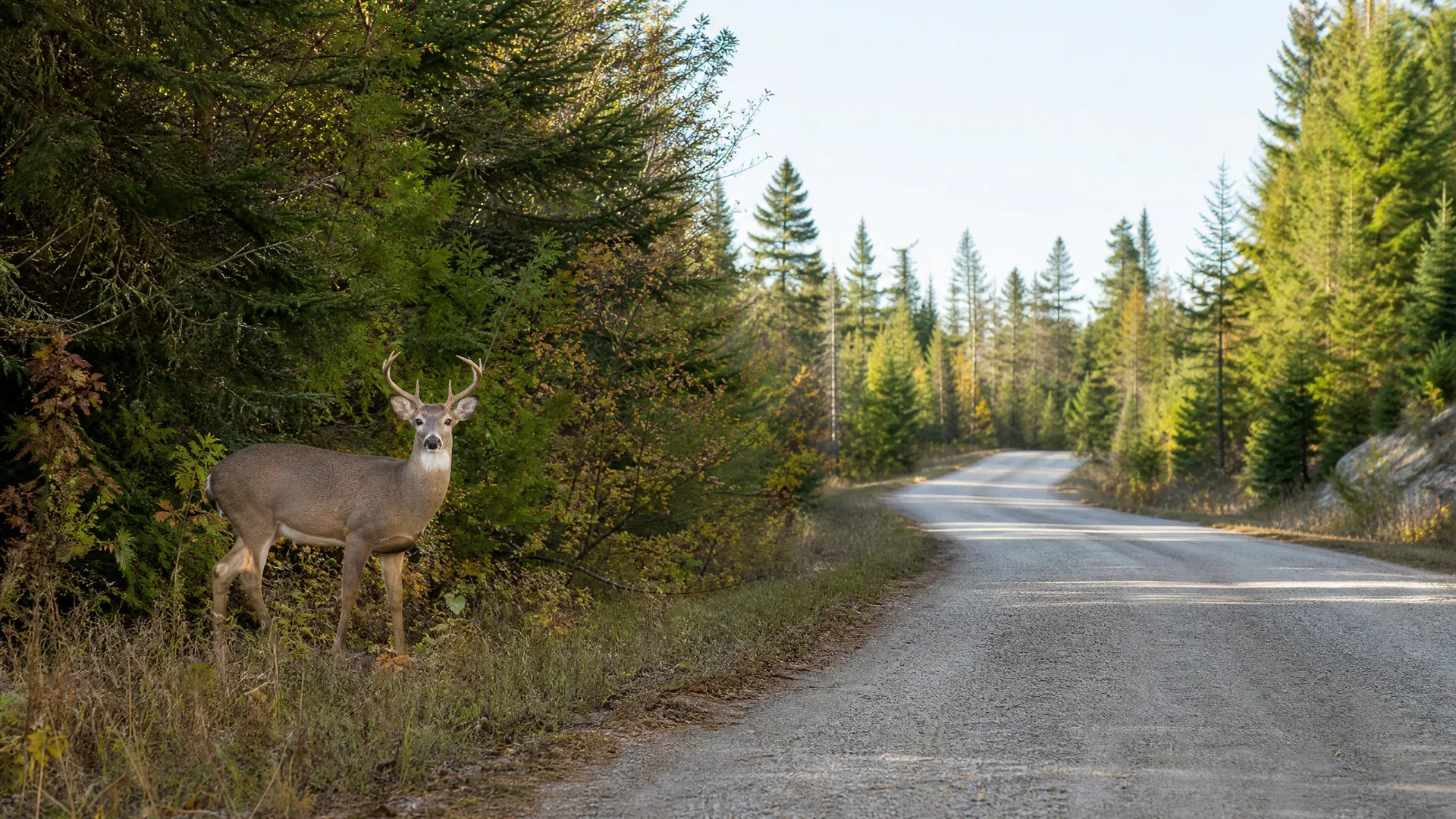
You're driving a rural road at dusk and a deer steps out, and you hit it directly, denting the front of the car.
This pays, since a direct animal strike is covered under comprehensive.
A deer runs across the road ahead of you, you swerve to miss it, and you clip a mailbox instead.
This is a collision claim, not a comprehensive one, since you hit the mailbox and not the deer.
Hail damages your car's hood and roof while it's parked outside during a storm.
This doesn't involve an animal, but it's still a comprehensive claim since hail falls under the same coverage.
Once you know whether you're keeping, adding or dropping this coverage, you can compare quotes with that decision already settled.
Questions people ask about this
Does hitting a deer raise my insurance rates?
Usually not by much, since animal strike claims are filed under comprehensive, which insurers typically treat more leniently than at-fault accidents. Check with your agent, since this can vary by how your policy is set up and how many claims you've filed recently.
What should I do right after hitting a deer?
Pull over safely, turn on your hazards, and check whether the car is still drivable before calling for help. Avoid approaching the animal, since an injured deer can be dangerous, and report the incident to police if the road is blocked or the car can't be moved.
Does my policy cover a deer that damages my car while it's parked?
Yes, if a deer runs into your parked car, that's still a comprehensive claim since it's damage from an animal, not from your own driving. Keep any evidence like a dent pattern or fur transfer in case you need to describe what happened.
Can I get reimbursed for a deer whistle or other prevention device?
No, preventive devices like deer whistles or extra lighting aren't reimbursed by insurance, since they're considered a purchase you make on your own. Some drivers add them anyway for peace of mind, but it won't affect your premium either way.
Is hitting a deer considered an at-fault accident?
No, animal strikes are generally not treated as at-fault accidents since there's nothing you could have done differently in most cases. This is part of why they're filed under comprehensive rather than collision or liability.