Collision Coverage on a Pickup Truck
Collision coverage pays to repair or replace your pickup when it's damaged in a crash, regardless of who caused it.
What collision coverage pays for
Covers
- Rollover in a ditch If your truck flips or slides off the road on its own, collision covers the damage.
- Hitting another vehicle Repairs to your truck are covered even when you're found at fault for the crash.
- Hitting a fixed object A mailbox, a guardrail, a fence post, any stationary object your truck strikes is covered.
- Single-vehicle parking lot damage Backing into a pole or clipping a cart corral counts as collision even with no other driver involved.
- Bed and cab damage from a wreck Structural and body damage to the truck bed, cab and frame from a collision is covered, not just the front end.
- Total loss payout If repair costs exceed what the truck is worth, collision pays out its value instead of fixing it.
Doesn't cover
- Hail or storm damage Weather damage falls under comprehensive coverage, not collision, since no impact with another object caused it.
- A deer or animal strike Hitting an animal is treated as comprehensive, not collision, even though the damage can look identical.
- Mechanical breakdown A transmission failure or engine problem isn't a collision and isn't covered by this or usually any auto policy.
- Tools or equipment in the bed Personal property you were hauling is a separate claim, often under comprehensive or a homeowners policy.
- Damage to the other person's vehicle That's paid by your liability coverage, not collision, which only pays for your own truck.
- Normal wear on tires or brakes Collision only responds to a specific crash event, not gradual wear from driving.
Worth it if the truck still has real value to protect
The first question is simple: what is the truck worth today, and could you cover that amount yourself without much strain. If the truck is older and worth little, collision coverage may cost more over a few years than the truck itself would bring in a claim. That math changes fast once a truck is newer, especially if it's still financed, since a lender will require this coverage until the loan is paid off.
How much you drive matters too. A truck that mostly sits in the driveway and makes occasional trips to the hardware store carries less risk than one driven daily on highways or back roads at dusk, when deer and sudden stops are more common. Less driving doesn't eliminate risk, but it does shift the odds.
Where the truck sits overnight plays a role as well. A truck parked on a quiet rural lane faces different risks than one parked on a busy street or in a shared lot. If you've paid off the truck and have enough savings to replace it without collision paying out, dropping the coverage and keeping that premium is a reasonable choice. If replacing the truck would strain your savings, keeping collision is the safer bet regardless of your age.
How a collision claim actually plays out
You choose a deductible when you set up the policy, and that's the amount you pay before coverage kicks in. A higher deductible lowers what you pay for the policy but means more out of pocket if you file a claim, so it's worth matching the deductible to what you could comfortably cover yourself.
After a crash, you report the damage and an adjuster inspects the truck, either in person or through photos you send in. If the truck can be repaired, collision pays the shop minus your deductible. If the cost to repair exceeds what the truck is worth, the insurer declares it a total loss and pays you that value instead, again minus your deductible.
Have your policy number, a description of what happened, and photos of the damage ready when you call. If another driver was involved, their information helps too, even though collision doesn't depend on fault. Keep in mind that filing a claim can affect your rate at renewal, so for minor damage some drivers choose to pay out of pocket instead.
Whether this coverage is required varies by state and by whether the truck is financed, so check your own policy or loan agreement to see what applies to you.
Collision versus comprehensive
Collision coverage
Collision pays for damage from hitting another vehicle or object, or from your truck rolling or flipping. It applies whether or not you're at fault.
Comprehensive coverage
Comprehensive pays for damage that isn't caused by a crash, like hail, fire, theft, vandalism or hitting an animal. The two are often sold as a pair but each has its own deductible.
If you keep one, most drivers who want to protect the truck's value keep both, since each handles a different kind of loss the other won't touch.
Real situations
You're pulling out of the pharmacy parking lot and back into a concrete pillar, denting the tailgate and bending the bumper.
Collision pays for this, since it's damage from hitting a fixed object, minus your deductible.
A hailstorm hits while your truck is parked at church on a Sunday morning, leaving dents across the hood and roof.
Collision doesn't pay for this; hail damage falls under comprehensive coverage instead.
A deer runs into the road at dusk on a county highway and your truck hits it, damaging the front end.
Collision doesn't pay for this either, since an animal strike is treated as comprehensive, not collision.
Once you know whether you're keeping, dropping or adjusting this coverage, you can compare quotes with that decision already made.
Questions people ask about this
Does collision coverage cover a cracked windshield?
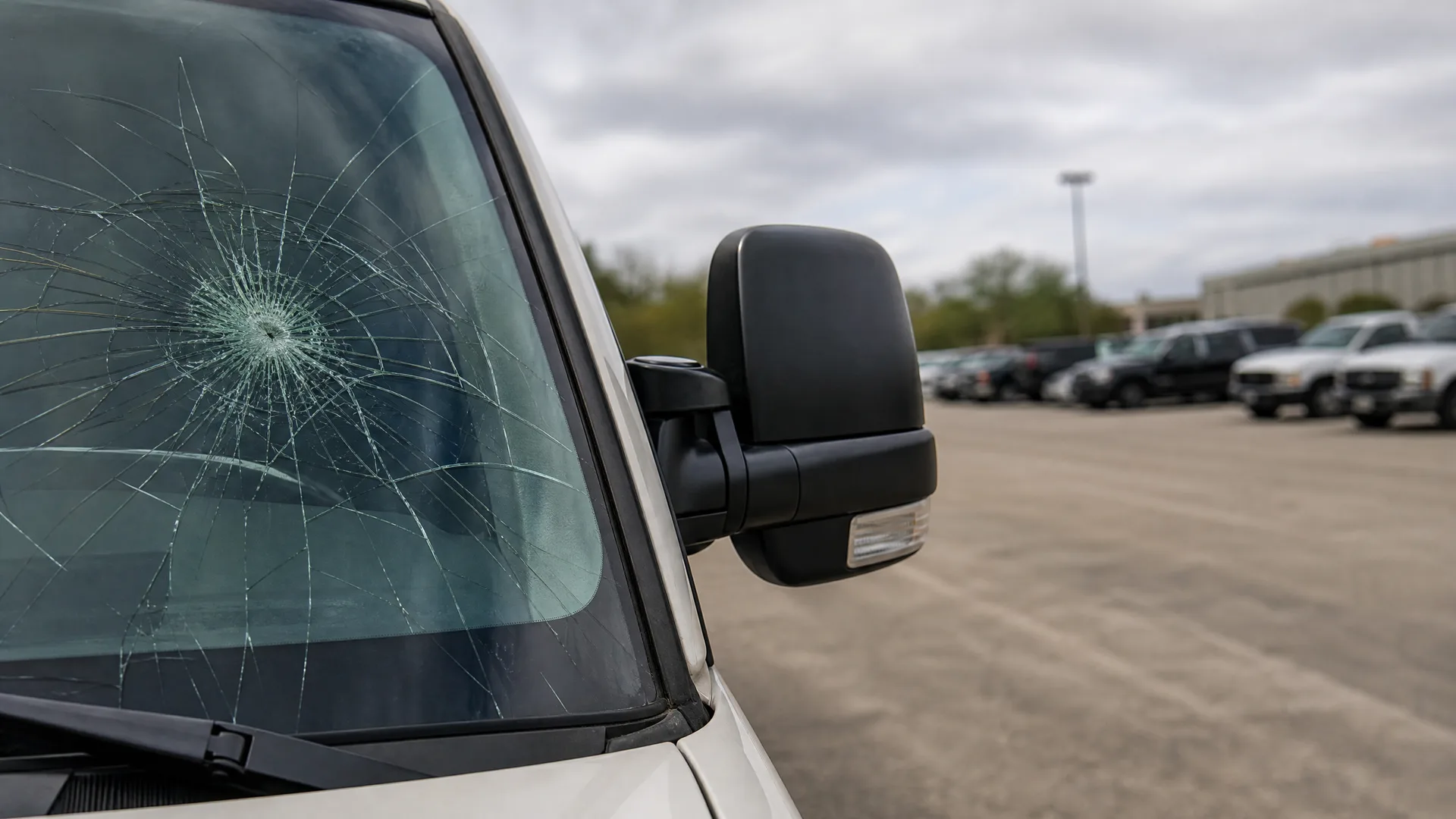
No, a cracked windshield is covered under comprehensive, not collision, since it's usually caused by a rock or debris rather than a crash. If your truck only has collision and not comprehensive, a windshield repair would come out of pocket. Check your policy to see if comprehensive is included alongside collision.
Can I add a truck topper or bed cover to my collision coverage?
Usually yes, but it depends on how your policy treats permanently attached equipment versus personal property. A bed cover that's bolted on is often considered part of the truck, while tools or gear stored in the bed are not. Ask your insurer how they classify what you've added so you know what's actually covered.
Does collision coverage follow the truck or the driver?
It follows the truck named on the policy, so if someone else drives your truck with your permission, the coverage generally still applies. If you drive a truck you don't own, your own policy may or may not extend to it depending on the circumstances. This varies by situation, so it's worth confirming with your insurer before lending or borrowing a vehicle.
Will my rate go up if I file a collision claim on an old truck?
It can, since insurers often raise rates after a paid claim regardless of the truck's age. For minor damage that costs close to your deductible, paying out of pocket sometimes makes more sense than filing. Weigh the repair cost against your deductible and how a claim might affect your renewal price.
What happens to collision coverage if I pay off my truck loan?
Nothing changes automatically, since collision stays on your policy until you remove it yourself. While the loan is active, your lender requires it, but once it's paid off you're free to drop it if you decide the truck's value no longer justifies the cost. That decision comes down to what the truck is worth and what you could afford to replace it.